
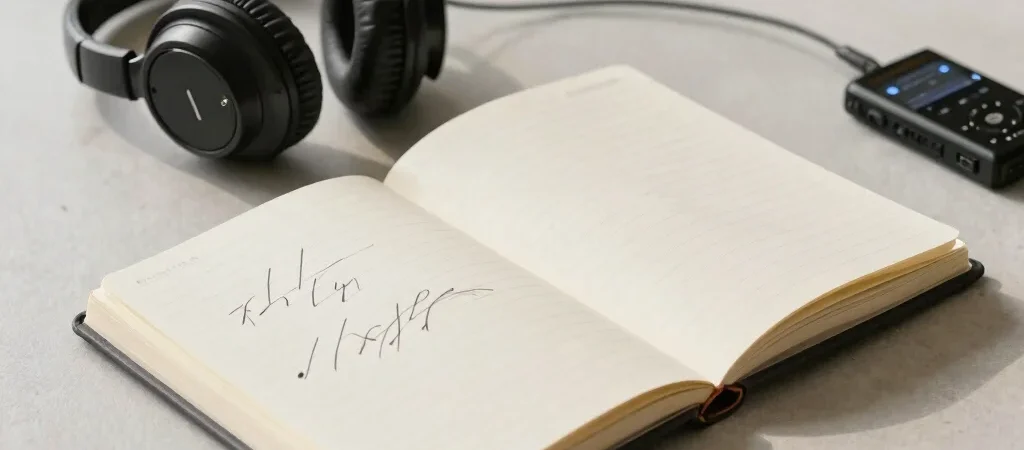
The player stops, but a sentence from the episode stays with you. That is often where a companion post becomes useful—not as a replacement for listening, but as another place to follow an idea at your own pace. Read and listen can sit side by side without competing.
Add something the audio cannot
A companion post works best when it contributes a little more than a replay of the episode description. It might draw out a question, add context, or make one thread easier to revisit later. The writing should feel connected to the audio while still offering a reason to stay with the page.
Give each format its place
Keep the audio player easy to find, then let the essay unfold below it with readable paragraphs and clear section breaks. That arrangement serves both kinds of visit: someone can listen first and continue into the writing, or arrive ready to read. Neither route needs to feel like the wrong one.
Make the connection clear
A short note near the beginning can explain how the post relates to its episode, so readers know whether they are opening a reflection, an extension, or useful background. Keep that explanation direct and let the writing do the rest. A companion post earns its place by carrying the thought forward.